peptides
Peptide Therapy for Muscle Loss: Which Compounds Have Real Data and What They Actually Cost
June 20, 2026
Affiliate disclosure: some links on this page are affiliate links and may earn us a commission at no extra cost to you — it never affects our rankings or reviews.
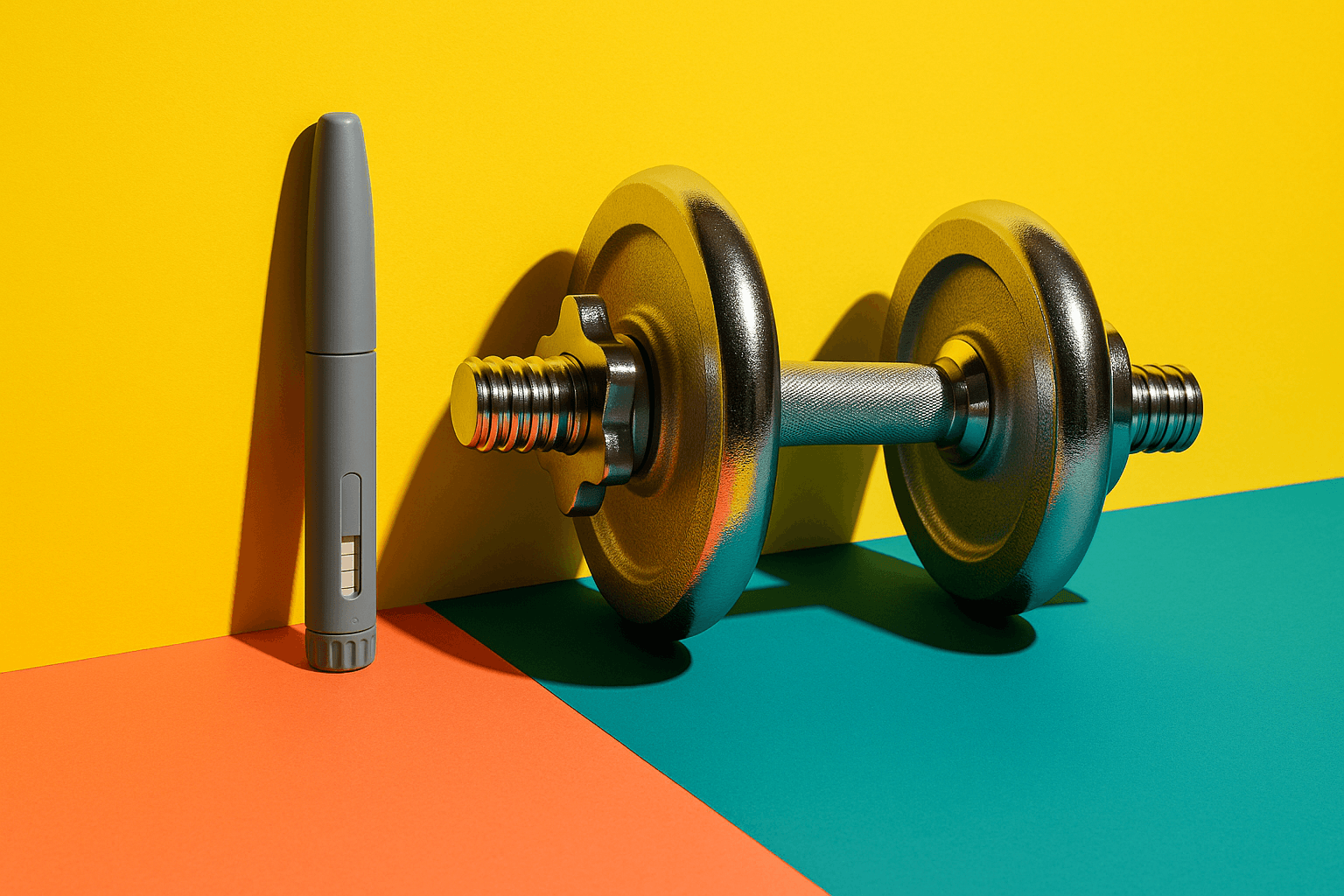
When the Mirror and the Barbell Both Start Lying to You
You're training consistently, eating enough protein, sleeping well — and still watching muscle disappear. Strength plateaus that used to resolve in a few weeks now drag on for months. Recovery that once took two days now takes four. For men and women in their 40s and 50s, this is the biology of sarcopenia at work: skeletal muscle mass declining at roughly 1–2% per year after age 40, with strength dropping faster still. The question serious athletes and longevity-minded patients are asking isn't whether peptide therapy is legitimate — it's which specific peptides have real clinical data behind them and what a supervised protocol actually costs in 2026.
What's Actually Happening at the Cellular Level
Growth hormone (GH) secretion drops with age, and GH is the primary driver of IGF-1, the downstream signal that triggers muscle protein synthesis and satellite cell activation. By age 60, most people secrete roughly 50% less GH than they did at 30, according to Corpas et al. (1993, Journal of Clinical Endocrinology & Metabolism) — a figure that has held up in subsequent literature. Less GH means reduced IGF-1, slower muscle repair, and an accelerating drift toward fat accumulation in muscle tissue.
This is why the peptide conversation centers on growth hormone secretagogues (GHS) — compounds that prompt the pituitary to release more of its own GH rather than replacing it externally. The distinction matters clinically: exogenous GH shuts down your own production via feedback inhibition; secretagogues work within your natural pulsatile rhythm and carry a lower risk of that feedback suppression.
The Peptides With Real Muscle Data Behind Them
Sermorelin is the most clinically studied GHS in this category. It's a 29-amino-acid analogue of growth hormone-releasing hormone (GHRH) that has FDA approval history — the original Geref brand was discontinued, and compounded versions now dominate clinical use. Walker et al. (2004, Journal of Clinical Endocrinology & Metabolism) enrolled 89 healthy older adults and found sermorelin increased lean body mass and reduced fat mass compared to placebo over six months. Typical clinical dosing runs 200–500 mcg subcutaneous injection at bedtime, timed to work with the natural nocturnal GH pulse.
CJC-1295 is a longer-acting GHRH analogue, typically combined with ipamorelin (a ghrelin mimetic) to produce a synergistic GH pulse. The CJC-1295/ipamorelin combination produces more consistent IGF-1 elevation than either peptide alone, which is why it has become the default starting protocol at anti-aging clinics. Standard dosing: 300 mcg CJC-1295 with 300 mcg ipamorelin, 2–3x weekly for the sustained-release DAC version, or nightly for the non-DAC formulation.
BPC-157 sits in a different category — it's not a GHS, it's a gastric pentadecapeptide with tissue repair signaling. Its relevance to muscle preservation is indirect but real: it accelerates tendon and muscle healing via upregulation of growth factor receptors including VEGFR2, which matters for older athletes who break down connective tissue faster than they rebuild it. Most clinical protocols run 250–500 mcg daily, administered subcutaneously or locally near the injury site.
What the Clinics Are Charging and Why It Varies
A typical CJC-1295/ipamorelin protocol through a supervised US telehealth platform runs $150–$350/month depending on dosing frequency and pharmacy sourcing. Sermorelin protocols run slightly less at $120–$250/month. BPC-157 prescribed as a standalone typically runs $80–$150/month.
The pricing variance is driven largely by whether the clinic sources from 503A compounding pharmacies — which prepare individual patient prescriptions — versus 503B facilities, which produce batches under stricter FDA manufacturing oversight. For the patient, 503B sourcing is the stronger quality signal. Some online peptide programs publish their pharmacy sourcing; many don't. Ask directly before committing to a protocol.
System Labs publishes protocol details and includes metabolic labs in their intake process — relevant because a baseline IGF-1 is required before starting any secretagogue protocol (normal adult reference range: 88–246 ng/mL for ages 40–54). Without that baseline, there is no way to measure whether the protocol is working.
The Limitations the Marketing Skips
Peptide secretagogues are not a shortcut around resistance training. The lean mass gains documented in trials — typically 1–3 lbs over 3–6 months — are meaningful but modest. They represent the margin, not the mechanism. The mechanism is still progressive overload and protein intake above 1.6g/kg/day, the threshold supported by Morton et al. (2018, British Journal of Sports Medicine).
The evidence base also has hard limits. Most GHS peptide trials have enrolled fewer than 100 subjects — the Walker et al. sermorelin trial itself enrolled 89. That sample size does not support confident extrapolation about long-term safety. The FDA has approved neither CJC-1295 nor ipamorelin for any indication; their clinical use exists entirely within the compounding regulatory framework, not as approved therapies.
How to Evaluate a Protocol Before You Start
The minimum viable intake process includes: baseline IGF-1 and GH, fasting glucose (GH secretagogues can elevate blood glucose in some patients), and a direct conversation about recovery metrics and training history. Clinics that skip labs and go straight to a peptide recommendation are pattern-matching to a demographic, not evaluating a patient.
Yucca Health includes a physician consult and lab review as standard intake — a reasonable floor for what this level of care should require.
The practical summary: sermorelin and CJC-1295/ipamorelin have enough data to justify a trial if your IGF-1 tests below the age-adjusted reference range, your training is already disciplined, and your budget covers 3–6 months of consistent use. BPC-157 makes the most sense as an adjunct when connective tissue recovery is the specific bottleneck. Neither compound replaces the fundamentals — each shifts the recovery curve modestly when the fundamentals are already in place.
Peptide Clinic Finder is a comparison platform. The author may receive compensation if you sign up through links on our partner pages.