peptides
How to Find a Peptide Clinic Worth Using — Not Just the Closest One
May 15, 2026
Affiliate disclosure: some links on this page are affiliate links and may earn us a commission at no extra cost to you — it never affects our rankings or reviews.
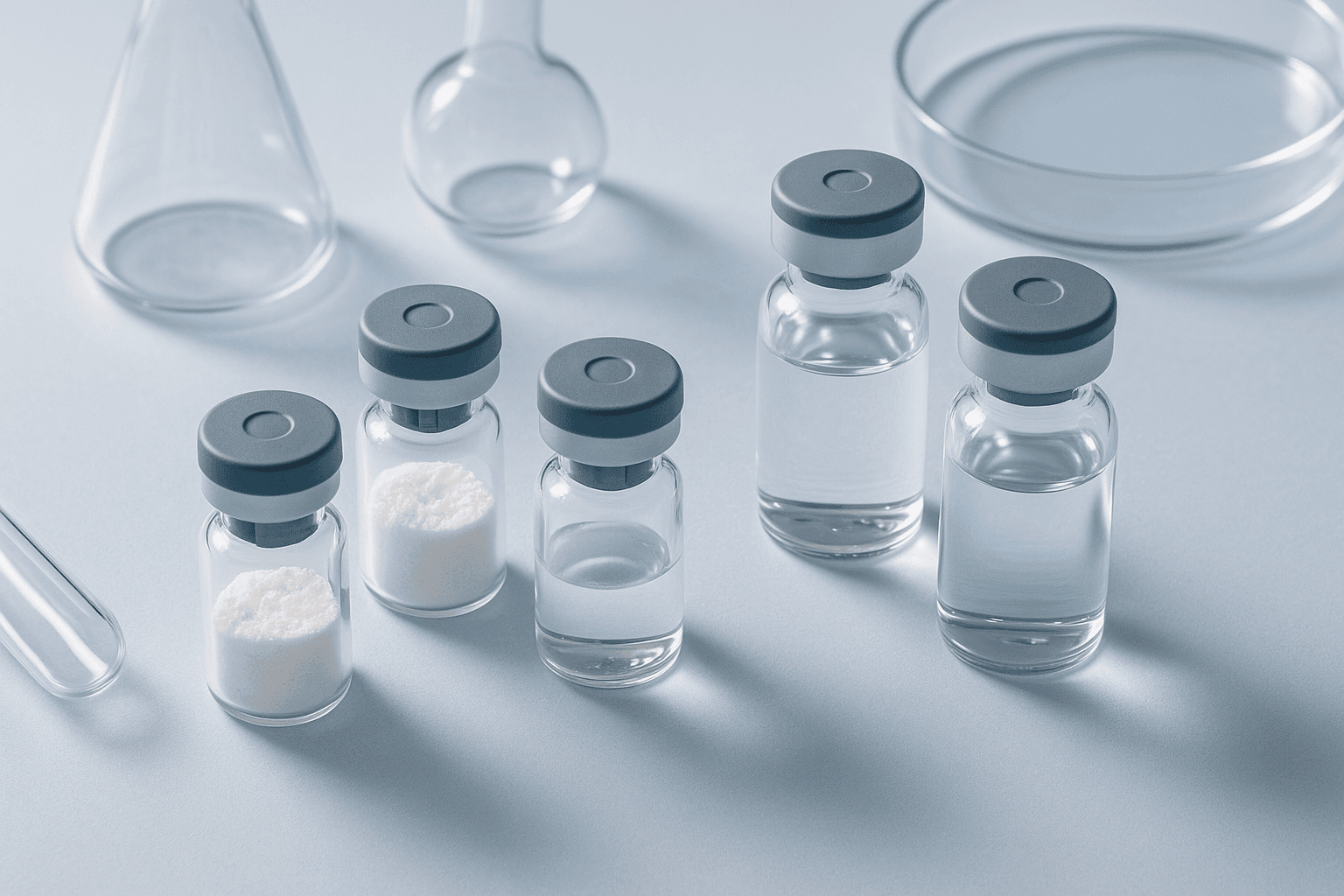
You've spent two hours reading about BPC-157 or sermorelin, you're reasonably convinced you want to try peptide therapy, and now you're staring at a Google Maps result showing three "wellness centers" within 15 miles. One has a stock-photo homepage. Another lists peptides as a service somewhere below cryotherapy and "executive health packages." The third has a phone number that goes to voicemail. This is the actual experience of searching for peptide therapy locally in 2024, and it's worse than it needs to be because most people use proximity as a proxy for quality when it's nearly useless as a filter.
Why "Near Me" Is the Wrong First Filter
The peptide therapy space has no unified licensing standard. A clinic in your city might be staffed by a board-certified endocrinologist running a research-informed protocol, or it might be a med-spa that added peptides to its menu after a weekend training. Geographic closeness tells you nothing about which you're walking into.
What matters: whether the clinic has a prescribing physician on staff (not just a supervising physician listed on paper), whether they compound in-house or source from an FDA-registered 503B compounding pharmacy, and whether they require baseline labs before writing a prescription. If a clinic will ship you peptides after a 10-minute async questionnaire, that's a red flag about their protocol depth.
The peptide clinics directory filters by these criteria and lets you cross-reference options across telehealth and local providers rather than just defaulting to whoever ranks for your zip code.
What a Competent Intake Process Looks Like
A clinic worth using will pull baseline labs before dosing you. For growth hormone-axis peptides like sermorelin or CJC-1295, that means at minimum an IGF-1 level, with a normal adult reference range of roughly 115–307 ng/mL for adults aged 30–50 depending on the assay. Thorough clinics also run a full metabolic panel and fasting glucose, since growth hormone secretagogues can transiently affect insulin sensitivity.
Dosing protocols should be individualized, not templated. A standard starting dose for sermorelin is 200–300 mcg subcutaneously before bed — the timing matters because it's designed to amplify the natural nocturnal GH pulse. A clinic that hands everyone the same dose on day one without reviewing their IGF-1 baseline is doing population-level medicine on an individual.
For peptides like BPC-157, used for musculoskeletal recovery, the regulatory situation is explicit: the FDA's 2022 guidance removed BPC-157 from the list of permissible compounded substances. Clinics still offering it are either unaware of or working around that restriction — know that before you hand over your credit card.
The Cost Landscape (Actual Numbers)
Telehealth-delivered peptide therapy has pushed prices down, but there's still a wide range. A monitored sermorelin protocol with quarterly labs typically runs $150–$350 per month depending on the clinic and whether labs are bundled. Compounded semaglutide, which some clinics bundle with peptide programs, runs $150–$400/month versus $936–$1,350/month at retail for brand-name Ozempic (GoodRx pricing, mid-2024).
In-person clinics carry overhead that telehealth platforms don't. A local clinic charging $500/month for the same sermorelin protocol available remotely for $200 is not necessarily offering more — they may just have higher rent. The peptide therapy guides break down cost differences by protocol type if you want to benchmark what you're being quoted.
The Telehealth vs. In-Person Trade-Off
The practical argument for telehealth is price and access. The practical argument for in-person is supervision quality — a physician who can examine you, watch your injection technique, and order labs through their own system rather than asking you to upload results from a third-party draw.
For injection-based peptides, technique matters. Subcutaneous administration done incorrectly — wrong angle, wrong site rotation, wrong reconstitution — affects both efficacy and tolerability. At least one in-person visit to establish the protocol is worth the extra cost, even if you then manage ongoing dosing through a telehealth provider.
A hybrid approach is underused: find a local clinic for initial intake and injection training, then manage ongoing prescriptions through a telehealth platform at lower cost. Not every clinic will cooperate with this structure, but the ones focused on outcomes rather than recurring billing often will.
Specific Questions to Ask Before You Commit
Skip "are you licensed?" and ask things that separate protocol-driven clinics from order-takers:
- Which 503A or 503B pharmacy do you source from, and can I see their COA (certificate of analysis)?
- What's your protocol if my IGF-1 comes back above the normal range after 90 days?
- Do you adjust dosing based on follow-up labs, or is the protocol fixed?
- What's your physician's specific experience with peptide prescribing — not wellness medicine generally?
If the intake coordinator can't answer these or has to "check with the doctor," you're in a volume-first practice.
The Real Shortcut
Proximity is a convenience consideration, not a quality signal. The clinics doing this well — labs at baseline, individualized dosing, sourcing from verified 503B compounders, monitoring IGF-1 at follow-up — are findable remotely and often cheaper than whatever ranked first in your local search. Search by protocol quality, not by zip code, and you'll narrow the field faster.
Peptide Clinic Finder is a comparison platform. The author may receive compensation if you sign up through links on our partner pages.