glp1
GLP-1 Microdosing for Wellness: What Lower Doses Actually Do — and Where the Evidence Runs Out
May 19, 2026
Affiliate disclosure: some links on this page are affiliate links and may earn us a commission at no extra cost to you — it never affects our rankings or reviews.
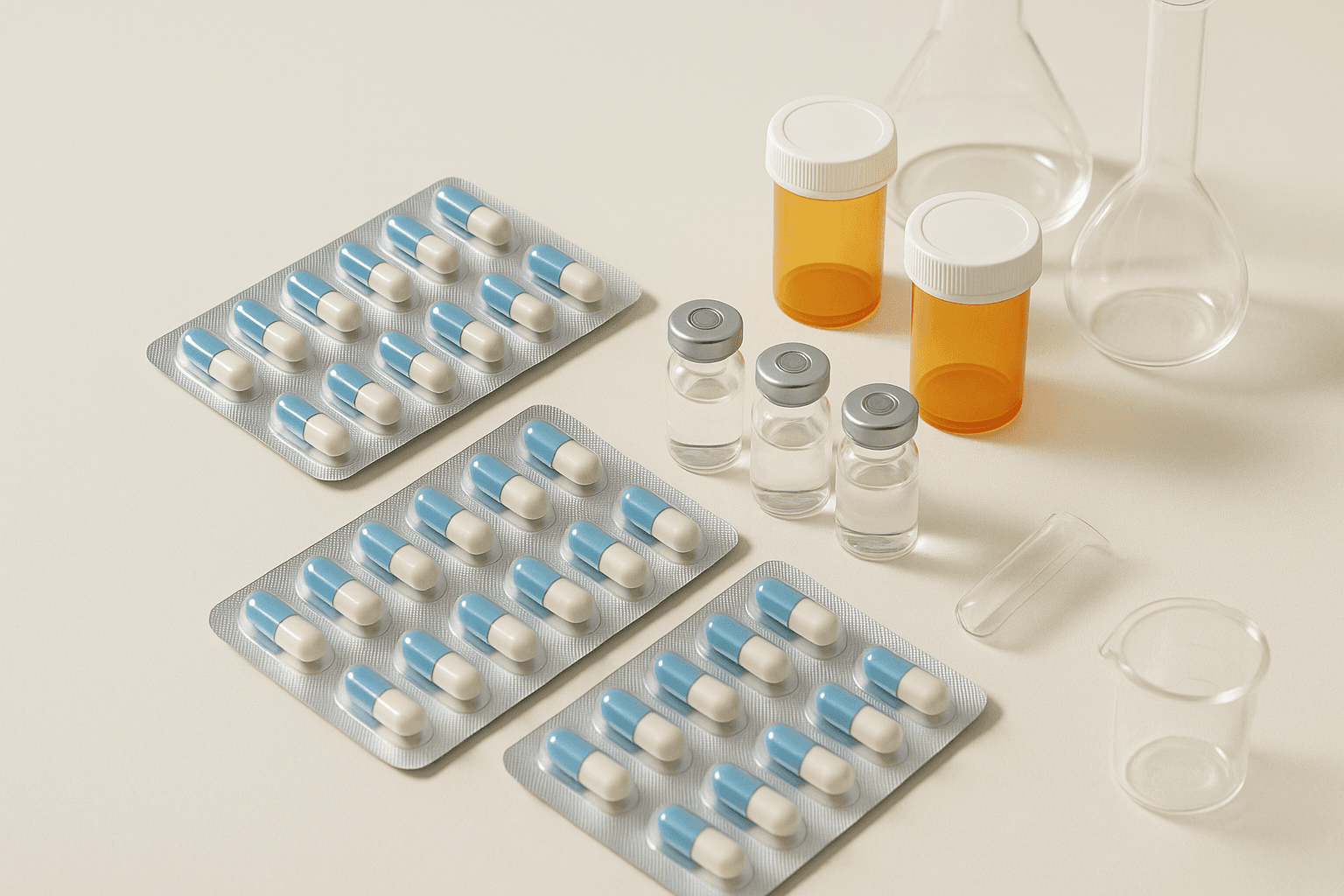
The Case for GLP-1 Microdosing: What Lower Doses Actually Do (and Don't Do)
You're not trying to lose 50 pounds. You're 15 pounds over where you feel best, your appetite has been running hotter than usual, and you've watched a friend drop weight on semaglutide while complaining every week about nausea and fatigue. The standard titration schedule — 0.25 mg weekly, climbing toward 2.4 mg — feels like a sledgehammer for a job that might need a scalpel. So when your provider mentions microdosing, or you read about it in a longevity forum, the appeal is immediate. The evidence base is thinner than the marketing around it, and the trade-offs are real.
What "Microdosing" Actually Means in This Context
There's no FDA-approved microdosing protocol for GLP-1 receptor agonists. When clinicians use the term, they typically mean maintaining doses well below standard therapeutic ranges — for semaglutide, that often looks like staying at 0.25 mg or 0.5 mg per week indefinitely rather than titrating upward. For tirzepatide, it might mean holding at 2.5 mg or 5 mg rather than moving toward the 10–15 mg range used in SURMOUNT-1.
The rationale isn't arbitrary. The STEP 1 trial (Wilding et al., 2021, n=1,961) found that participants on 2.4 mg semaglutide lost an average of 14.9% of body weight over 68 weeks — but 44% reported nausea and 24% reported vomiting. Sub-therapeutic doses largely avoid this by keeping GLP-1 receptor activation in a gentler range. What you sacrifice is magnitude of effect. What you potentially gain is tolerability, adherence, and a lower cost floor.
The Wellness Use Case That's Actually Driving This
The patients most interested in microdosing aren't seeking obesity treatment. They've already lost the weight, or were never far from goal, and are asking whether a small, consistent GLP-1 signal helps with appetite regulation, inflammatory markers, and metabolic flexibility.
There's biological basis for this interest. GLP-1 receptors exist in the brain, gut, and pancreas, and even sub-maximal activation affects gastric emptying and satiety signaling. Preclinical data on neuroinflammation is intriguing, but human trials at low doses for non-weight endpoints are sparse. What's not sparse is n=1 reporting in longevity-focused clinics, where physicians are increasingly prescribing 0.1–0.25 mg semaglutide weekly for patients who've reached goal weight and want to sustain metabolic stability without full-dose side effects.
This is practice-based evidence. Not illegitimate — but distinct from controlled trial data.
The Cost Equation Is More Favorable Than You'd Expect
Branded GLP-1s carry the same list price regardless of dose — Wegovy's list price in 2026 runs approximately $1,350 per month, with insurance coverage that remains inconsistent across commercial plans. Compounded semaglutide prescribed at low doses changes that math. Platforms offering compounded maintenance-dose programs price them at $99–$175 per month, depending on dose and format.
Clinic models with dose flexibility enable this better than rigid protocols. Shed, which offers a sublingual lozenge formulation, is relevant here because buccal and sublingual formats allow more granular dosing adjustments than prefilled injection pens designed for 0.5 mg increments. If you're comparing structured programs, the best online GLP-1 programs available in 2026 vary significantly in how much dosing flexibility they actually offer versus how much they market it. The Eden vs Ro comparison is illustrative — Eden's compounding-based model allows dose holds and reductions more readily than Ro's standardized titration pathway.
What the Evidence Supports (and Where It Goes Quiet)
Microdosing is well-supported for tolerability and cost reduction, weakly supported for any specific wellness outcome beyond modest appetite suppression, and essentially unstudied for the neurological and anti-inflammatory effects getting the most attention in longevity circles.
Weight loss at sub-therapeutic doses is real but modest. STEP 5 extension data shows patients who remained below full titration had slower but continued weight trajectory improvements versus placebo — but this was not the primary analysis, and the relevant subgroup numbered fewer than 200 participants. No trial has specifically enrolled otherwise healthy individuals for low-dose wellness optimization.
The absence of trial data doesn't establish that benefits are absent. It means providers and patients are operating on pharmacological rationale plus clinical observation. If your goal is 20%-plus weight reduction, microdosing won't get you there — STEP 1 participants on 2.4 mg achieved 14.9%; dose-response modeling from that trial suggests sub-0.5 mg doses produce roughly 2–4% body weight reduction at 68 weeks. If your goal is appetite stabilization after reaching goal weight, or you cannot tolerate standard doses, that calculation changes.
Practical Realities at the Clinic Level
Physicians prescribing microdose protocols are doing so off-label, which requires comfort with clinical judgment over standardized protocol. Not all weight loss clinics will accommodate this — many operate on fixed titration ladders because it simplifies operations and matches payer expectations. If you want a provider willing to hold you at 0.25 mg indefinitely, ask that question directly before enrolling.
Compounding pharmacies are central to this. Branded Wegovy pens dispense at 0.25 mg, 0.5 mg, 1.0 mg, 1.7 mg, and 2.4 mg — there is no 0.1 mg commercial option. Custom dosing requires compounded formulations, and the FDA's enforcement posture on compounded semaglutide has shifted three times since 2024, including a March 2025 removal of semaglutide from the shortage list that affected many compounders' ability to dispense. Confirming current regulatory status before committing to a compounded program is basic due diligence.
The Specific Takeaway
Microdosing GLP-1s is a legitimate clinical approach for three patient profiles: those managing tolerability issues at standard doses, those at or near goal weight seeking metabolic maintenance, and those for whom the full-dose cost structure doesn't pencil out at $1,350 per month. For anyone whose primary goal is meaningful weight loss from a significantly elevated starting point, the data favors titrating to therapeutic range. The wellness framing holds up on appetite and satiety — both are pharmacologically grounded in GLP-1 receptor distribution. The neurological and longevity claims are ahead of the evidence. Compare your options by reviewing GLP-1 providers with dose flexibility specifically in mind, and ask any prospective clinic directly how they handle patients who want to stay below standard titration.
Peptide Clinic Finder is a comparison platform. The author may receive compensation if you sign up through links on our partner pages.